


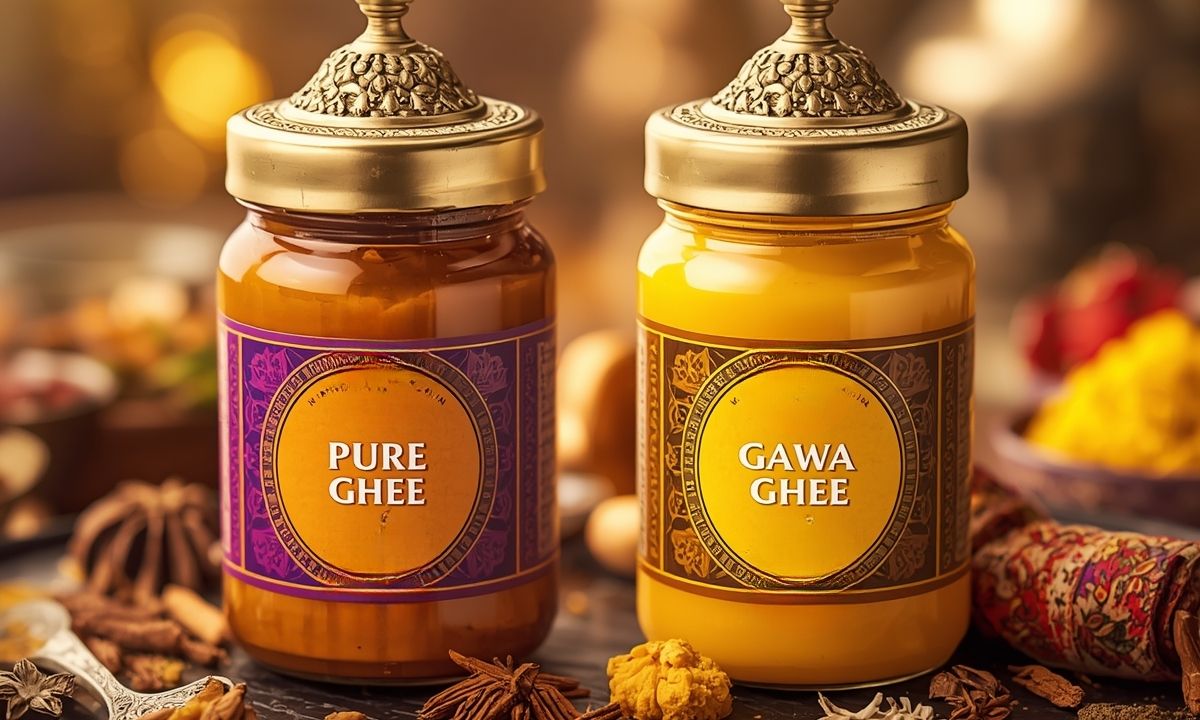

Talking about ghee, one of the staples of Indian cuisine, you can choose between pure cow ghee vs. gawa ghee. The two are cherished because of their intense taste and health properties, yet both have a method of preparation. Being aware of these differences can assist you in choosing the appropriate one to fit your kitchen.
What is Pure Cow Ghee?
This is a traditional milk product made from cow milk. The preparation process begins with boiling the milk, followed by cooling it to a lukewarm temperature. After this, the milk is churned to separate the white butter (makkhan) from the buttermilk. The next step involves heating the butter to a temperature of between 105 and 107°C. This procedure extracts the milk solids and moisture, resulting in ghee with a smooth texture that is easy to digest. It is a multi-purpose, everyday cooking fat, which is effective in sautéed and fried cooking and lends a mild buttery flavour to most dishes. Its simplicity is well favoured by many who use it as an everyday kitchen item.
What is Gawa Ghee?
A more careful, slow-cooking method of making ghee is called the Gawa Ghee, which is also known as the Bengali-style ghee. It is pure and traditional, and it is frequently produced in small batches by hand. The process of this ghee is unique because the solids or milk in the cream or curd are slowly cooked at a higher temperature, typically between 135 and 140°C.
The milk solids are caramelised for a long time in heat, and this gives the ghee its unique brown texture. The final product is a healthy, brown ghee that has a roasted nutty aroma and a deeper flavour. Due to this high heat, the finished product has more granular particles than pure cow ghee.
Key Differences: The Essence of Taste and Tradition
- Method of Production
Pure cow ghee is often prepared in a short time with modern equipment, whereas the Bengali ghee is prepared slowly using traditional methods, which is a major aspect of Bengali cooking.
- Taste and Smell
Pure cow ghee is smoother and is very strong, whereas with gradual caramelisation, traditional Bengali ghee is rich in earthy flavour and deep nutty aroma.
- Texture
Pure cow ghee typically carries a bright yellow-golden hue with a smooth texture, while traditional Bengali ghee is cooked longer at higher temperatures and takes on a deeper golden brown or brown shade and develops a slightly grainy texture. This graininess is often seen as a sign that the ghee is handmade.
- Cultural Value
Pure cow ghee is a practical thing of everyday use. Traditional Bengali ghee is seen as a luxury. Its unique production makes it a treasured food in festivals, ceremonies, and special meals, but not everyday cooking.
Conclusion: Which Is Better for You?
The decision to use pure cow ghee or Gawa ghee depends on your cooking needs and preferences. Pure cow ghee is a versatile, budget-friendly option perfect for everyday cooking, from chapatis to rice, desserts, and other food preparations. Its mild taste doesn’t overpower dishes and suits a wide variety of recipes. On the other hand, Gawa ghee, with its distinct roasted flavour and texture, is typically used as a finishing touch, often drizzled over dishes to enhance flavour rather than for deep frying or heavy cooking. Many home cooks keep both: pure cow ghee for regular meals and Gawa ghee for special occasions when they want to add a rich, nutty finish to their dishes. Whichever you choose, you’re adding a healthy, flavorful staple to your kitchen.