


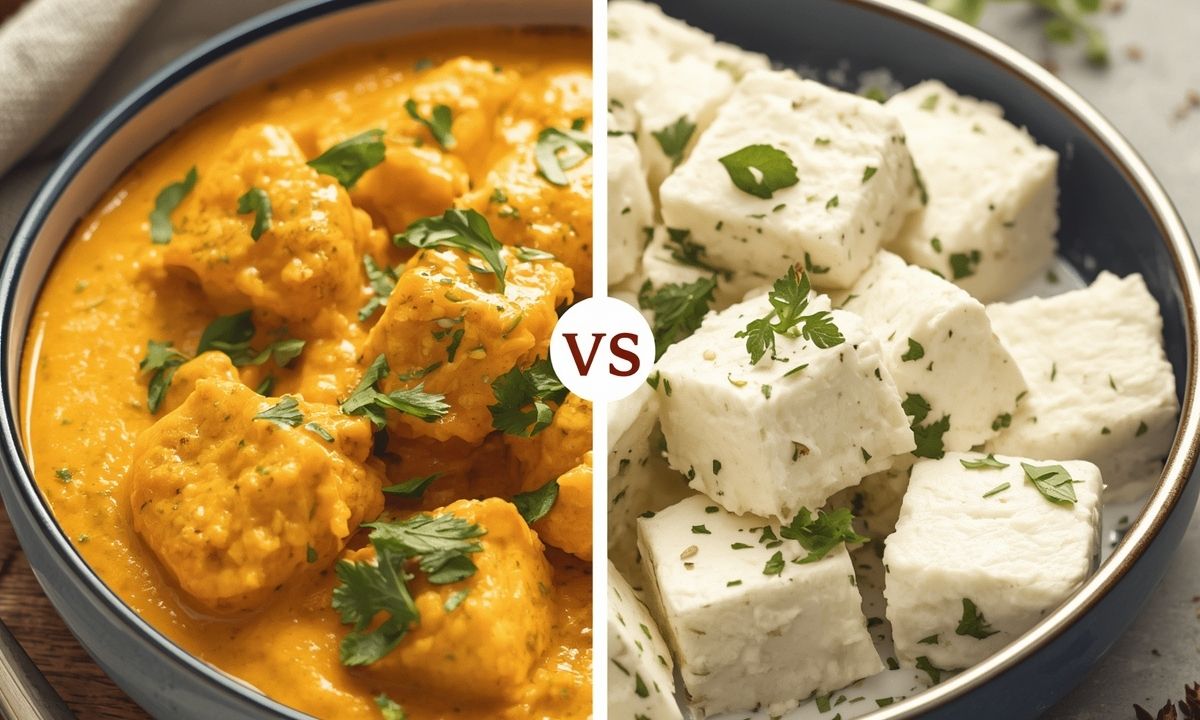

Paneer, or fine Indian cottage cheese, is a common ingredient in Indian families, which is always welcome in Indian families owing to its nutritional value and rich taste. With the evolving technology and evolving lifestyles, the processes of production, storage, and consumption of paneer have been diversified. Adya Dairy offers two of the best dairy products (fresh Malai Paneer and frozen Paneer), which have been distinguished according to nutrition, processing, and cooking flexibility.
Malai Paneer vs. Frozen Paneer: An Overview and the Key Differences.
Malai paneer consists of fresh creamy paneer (malai). It is smooth and creamy in texture and would be appropriate in meals where freshness and indulgence matter.
Frozen paneer is paneer that has been frozen soon after preparation by the use of modern freezing techniques that remove moisture.
Key Differences:
Texture
Malai paneer is soft and creamy; frozen paneer is hard, and it does not melt when thawing.
Shelf Life
Malai paneer has a shelf life of about 21 days; frozen paneer has a shelf life of 90 days.
Applications
Malai paneer is compatible with gravies and festive food; paneer is frozen and can be used in stir fries, tikkas, and bulk cooking.
Nutrition
The two types are protein, calcium, energy-dense, but malai paneer has a bit more fat because it includes cream.
Examples from Adya Dairy:
Adya Dairy Fresh Malai Paneer—It is soft, creamy, and rich in malai with 290 kcal, 18 g of protein, and 400 mg of calcium every 100 g. Shelf life: 21 days.
Adya Dairy Frozen Paneer is IQF-frozen to preserve nutrition and flavour with 290 kcal, 18 g protein, and 400 mg calcium per 100 g. Shelf life: up to 90 days.
The Science Behind the Processes
Malai Paneer
The production procedure of malai paneer is aimed at producing an extremely soft, creamy, and moist curd. This starts with standardisation of milk to contain more fat, usually through the addition of cream.
- The milk is warmed to denature the whey proteins, and subsequently it is coagulated at a certain temperature (approximately 158°F or 70°C).
- Coagulation is made by the use of a food-grade acid, such as citric acid and is used to create a soft, sticky curd.
- A brief pressing of the curd is done to squeeze out the excess whey without losing too much moisture and fat, as this yields the desired soft texture.
Science of the Processes.
Malai Paneer
- Malai paneer manufacturing process is geared towards the creation of very soft, creamy, and wet curd. This begins with the standardisation of milk to have a higher content of fat, typically by including cream.
- The milk is heated in order to denature the whey proteins and later coagulated at some temperature (around 158°F or 70°C).
- Coagulation is achieved through the application of a food-grade acid, e.g. citric acid, and is utilised in the production of soft sticky curd.
- This is followed by a quick squeeze of the curd to drain out the excess whey, but not too much moisture and fat, because this gives the desired softness.
Frozen Paneer
The biggest difficulty linked to frozen paneer is the prevention of the formation of large ice crystals, which may ruin the texture of paneer on thawing.
- After the paneer is ready and after chilling, it is subjected to a high rate of freezing, like the supercooling techniques, to lessen the size of the ice crystals.
- The quick freezing technique preserves the fine protein-fat structure of the paneer and prevents the paneer from crumbling or drying.
These procedures make sure that the paneer will not lose its spongy nature and smoothness once it is thawed and is ready to be utilised.
Culinary Uses
- Adya Dairy Malai Paneer
Best used with restaurant-type gravies and meals like Paneer Butter Masala, Shahi Paneer, or Paneer Lababdar. It is creamy, and it combines well with curries, which are luxurious indulgences. As the best paneer in the dairy market, it is also used in the preparation of festive and special occasion dishes, where fresh and soft paneer is mandatory.
- Adya Dairy Frozen Paneer
Ideal in the event of daily cooking and storage of food on a long-term basis. Only some of the examples include stir-fried paneer bhurji, paneer tikka, and even baked casseroles, when frozen paneer does not alter its shape or flavour due to the high-heat cooking methods. Its shelf life is also very long, making it very suitable in hotels, restaurants, and homes where there is a high volume of stock and it is not likely to be spoiled.
Summary: How to choose the best option for your kitchen
Adya Dairy Malai Paneer and Adya Dairy Frozen Paneer have advantages of their own. The Malai Paneer is fresher and creamier compared to any other, but frozen paneer offers a long shelf life and uniform nutrition. It can be the freshness of malai or the ease of frozen goodness, but regardless, Adya Dairy promises the finest dairy paneer with quality, purity, and taste in every pack.