


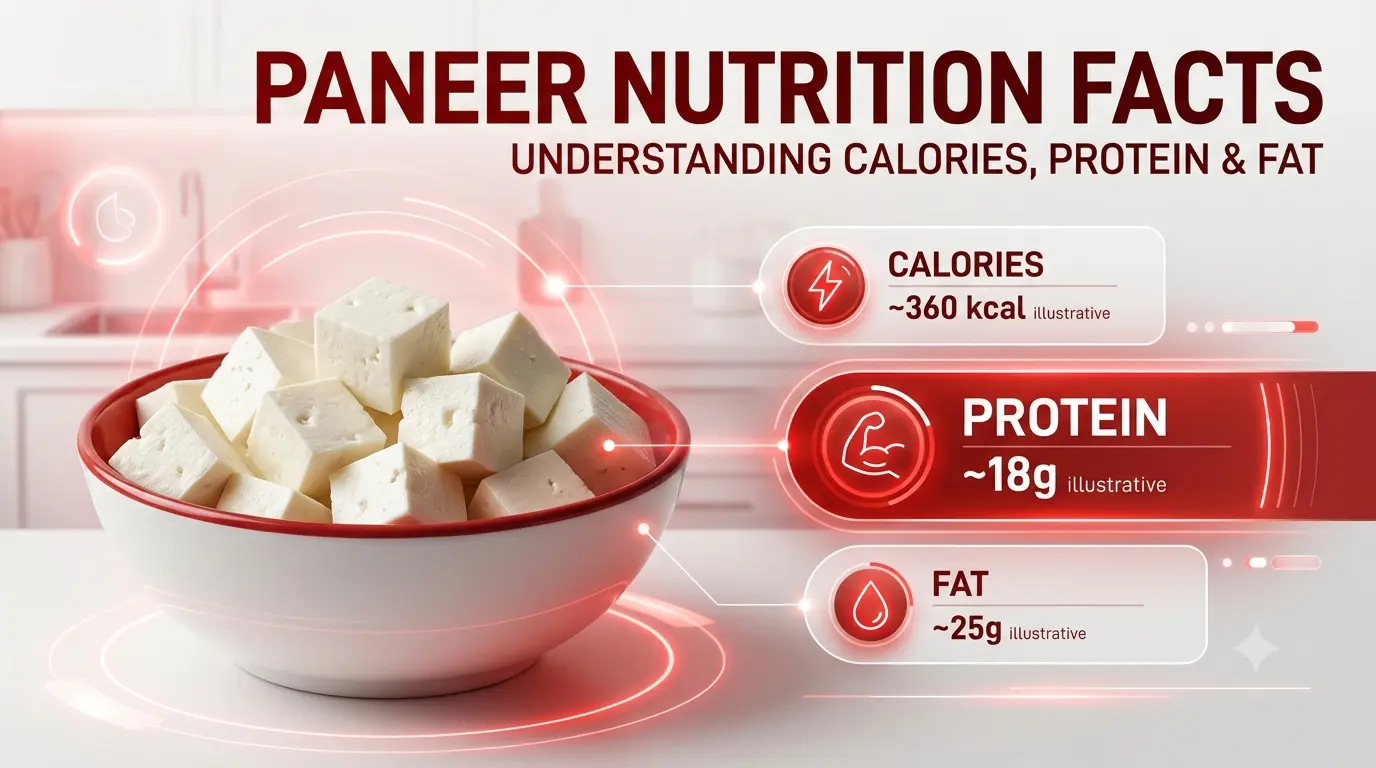

Paneer contains approximately 305 calories, 18.86 grams of protein, 24.78 grams of fat, and 2.41 grams of carbohydrates per 100 grams, according to Indian food composition data. It also provides important minerals and complete milk protein. However, the exact nutritional value varies depending on the milk used, moisture content, and preparation method.
What Are the Nutrition Facts of Paneer Per 100 Grams?
Paneer is a fresh Indian cheese made by curdling milk and separating the milk solids from the whey. It is widely consumed in vegetarian diets because of its protein content and versatility in cooking.
Understanding paneer nutrition facts per 100g helps you make informed decisions about calorie intake, protein requirements, and dietary fat.
Paneer Nutrition Chart Per 100g
According to the Indian Food Composition Tables (IFCT 2017), published by the ICMR-National Institute of Nutrition, regular paneer contains approximately:
| Nutrient | Amount Per 100g |
|---|---|
| Calories | 305 kcal |
| Protein | 18.86 g |
| Total Fat | 24.78 g |
| Carbohydrates | 2.41 g |
| Moisture | 51.96 g |
| Calcium | Varies by product |
| Phosphorus | Varies by product |
Source: IFCT 2017, Table 1, food code L003. Energy is converted from 1,278 kJ to approximately 305 kcal. Mineral content should be checked against the relevant mineral composition table or individual product label.
These figures represent general reference values rather than the exact composition of every packaged paneer product.
How Many Calories Are in Paneer?
Regular paneer contains approximately 305 calories per 100 grams. Most of these calories come from milk fat, followed by protein. The total calorie content depends on the quantity consumed and the ingredients used during cooking.
Paneer Calories by Serving Size
| Serving Size | Approximate Calories |
|---|---|
| 50 grams | 153 kcal |
| 75 grams | 229 kcal |
| 100 grams | 305 kcal |
| 150 grams | 458 kcal |
| 200 grams | 610 kcal |
These values apply to plain paneer without additional ingredients.
For example, paneer tikka prepared with minimal oil may contain fewer calories than paneer butter masala made with cream, butter, and nuts.
If you are tracking calories, consider the complete recipe rather than the paneer alone.
How Much Protein Does Paneer Contain?
Paneer contains approximately 18.9 grams of protein per 100 grams, making it a useful source of protein for vegetarians. Its milk proteins supply all nine essential amino acids required for muscle maintenance, tissue repair, and other important bodily functions.
Is Paneer Good for Muscle Growth?
Yes. Paneer can support muscle growth when combined with resistance training and adequate overall protein intake.
It contains casein, a milk protein that digests relatively slowly and provides a gradual supply of amino acids.
A 50-gram serving of paneer provides approximately 9.4 grams of protein, while 100 grams supplies around 18.9 grams.
For people following vegetarian diets, combining paneer with lentils, beans, vegetables, and whole grains helps create a more varied nutritional intake.
However, regular paneer is also relatively high in fat. Those looking to increase protein while limiting calories may prefer lower-fat alternatives.
Read more: https://adyadairy.com/paneer-protein-your-complete-nutrition-guide/
How Much Fat Is Present in 100 Grams of Paneer?
Regular paneer contains approximately 24.8 grams of fat per 100 grams. A substantial portion is saturated fat because paneer is made from milk. Fat provides energy and supports essential bodily functions, but portion size matters when managing total calorie and saturated fat intake.
Full-Fat Paneer vs Low-Fat Paneer
The fat content depends largely on the type of milk used and the manufacturing process.
| Nutritional Factor | Full-Fat Paneer | Low-Fat Paneer |
|---|---|---|
| Calories | Generally higher | Generally lower |
| Fat Content | Higher | Lower |
| Protein | Good source | Good source |
| Texture | Rich and creamy | Often firmer |
| Dietary Preference | General balanced diets | Reduced-fat meal plans |
Both varieties provide milk protein. However, their nutritional values can differ significantly, so comparing product labels is important.
The Food Safety and Standards Authority of India (FSSAI) also establishes compositional standards for paneer and low-fat paneer.
Is Paneer Better Than Tofu or Eggs for Protein?
Paneer, tofu, and eggs are all useful protein sources, but their calories and fat content differ. Regular paneer provides more protein per 100 grams than boiled eggs, while certain firm tofu varieties provide comparable protein with fewer calories.
Protein Comparison Per 100 Grams
| Food | Calories | Protein |
|---|---|---|
| Regular Paneer | 305 kcal | 18.9 g |
| Firm Tofu (calcium-set) | 144 kcal | 17.3 g |
| Boiled Whole Eggs | 148 kcal | 13.4 g |
Sources: ICMR-NIN IFCT 2017 for paneer and boiled eggs; USDA FoodData Central, food ID 172475, for firm calcium-set tofu.
Paneer is a convenient option for lacto-vegetarians. Tofu offers a plant-based alternative suitable for vegan diets, while eggs provide complete protein with fewer calories per 100 grams than regular paneer.
The best choice depends on personal dietary preferences, nutritional goals, and portion sizes.
What Are the Health Benefits of Eating Paneer?
Paneer provides protein, fat, and minerals that contribute to a balanced diet. Its nutritional benefits are most meaningful when consumed alongside vegetables, whole grains, and other nutrient-rich foods.
Supports Muscle Maintenance
Paneer’s complete milk protein contributes to muscle repair and helps maintain muscle tissue during everyday activities and exercise.
Contributes to Bone Health
Paneer can provide calcium and phosphorus, which are important for maintaining healthy bones and teeth. The actual quantities vary by product and manufacturing process.
Helps Maintain Fullness
The combination of protein and fat can make paneer-based meals satisfying, especially when paired with fibre-rich vegetables.
Supports Vegetarian Nutrition
Paneer provides a practical way for lacto-vegetarians to increase protein intake through familiar dishes such as palak paneer, paneer bhurji, and grilled paneer.
Is Paneer Good for Weight Loss?
Paneer can be included in a weight-loss diet when consumed in appropriate portions. Its protein content may support fullness, but regular paneer is calorie-dense. Weight management depends primarily on overall calorie intake, food choices, and physical activity.
To make paneer meals more calorie-conscious, consider moderate portions of around 50–75 grams and prepare them with vegetables and minimal added oil.
Grilled paneer, vegetable-rich paneer bhurji, and simple paneer salads can be practical choices.
Choosing lower-fat paneer may also help reduce calorie and saturated fat intake.
How Much Paneer Should You Eat Daily?
There is no universally recommended daily quantity of paneer. A serving of 50–100 grams can fit into many balanced diets, depending on overall calorie needs, physical activity, and other dietary protein sources.
For example, 50 grams of regular paneer provides approximately 153 calories and 9.4 grams of protein.
Someone who exercises regularly may require more total daily protein, while a person monitoring saturated fat intake may prefer smaller portions or reduced-fat paneer.
The appropriate serving depends on your complete diet rather than paneer consumption alone.
Read more: https://adyadairy.com/10-easy-paneer-dishes-for-dinner-to-try-at-home/
How Can You Make Paneer Meals More Nutritious?
Paneer becomes part of a more balanced meal when paired with vegetables, whole grains, and other nutrient-rich ingredients.
Adding spinach, capsicum, peas, tomatoes, or broccoli increases the variety of vitamins, minerals, and fibre.
Cooking methods also matter. Grilling, lightly sautéing, or preparing paneer in tomato-based gravies can help limit added fat compared with recipes containing large quantities of butter or cream.
Simple dishes such as palak paneer, vegetable paneer bhurji, and whole-wheat paneer wraps can provide nutritious everyday meal options.
How Do You Choose Good-Quality Paneer?
Good-quality paneer should have appropriate packaging, clear nutritional information, and proper storage instructions.
When comparing paneer products, check the protein, fat, and calorie content per 100 grams. Also examine the ingredient list, manufacturing date, expiry date, and refrigeration requirements.
The best paneer for your diet is one that meets your nutritional preferences while offering suitable freshness, texture, and cooking performance.
A trustworthy paneer brand should provide transparent product information rather than relying solely on promotional claims.
Make Paneer a Nutritious Part of Your Everyday Diet
Understanding paneer nutrition facts helps you make informed decisions about protein, calories, fat, and portion sizes. Paneer can be a valuable addition to vegetarian meals when consumed in moderation and combined with a balanced diet.
Looking for the best paneer brand for your everyday cooking? Explore Adya Dairy Paneer for homemade curries, grilled dishes, and family meals. Check the nutritional information on the pack, select portions that match your dietary needs, and enjoy paneer as part of a varied diet.