


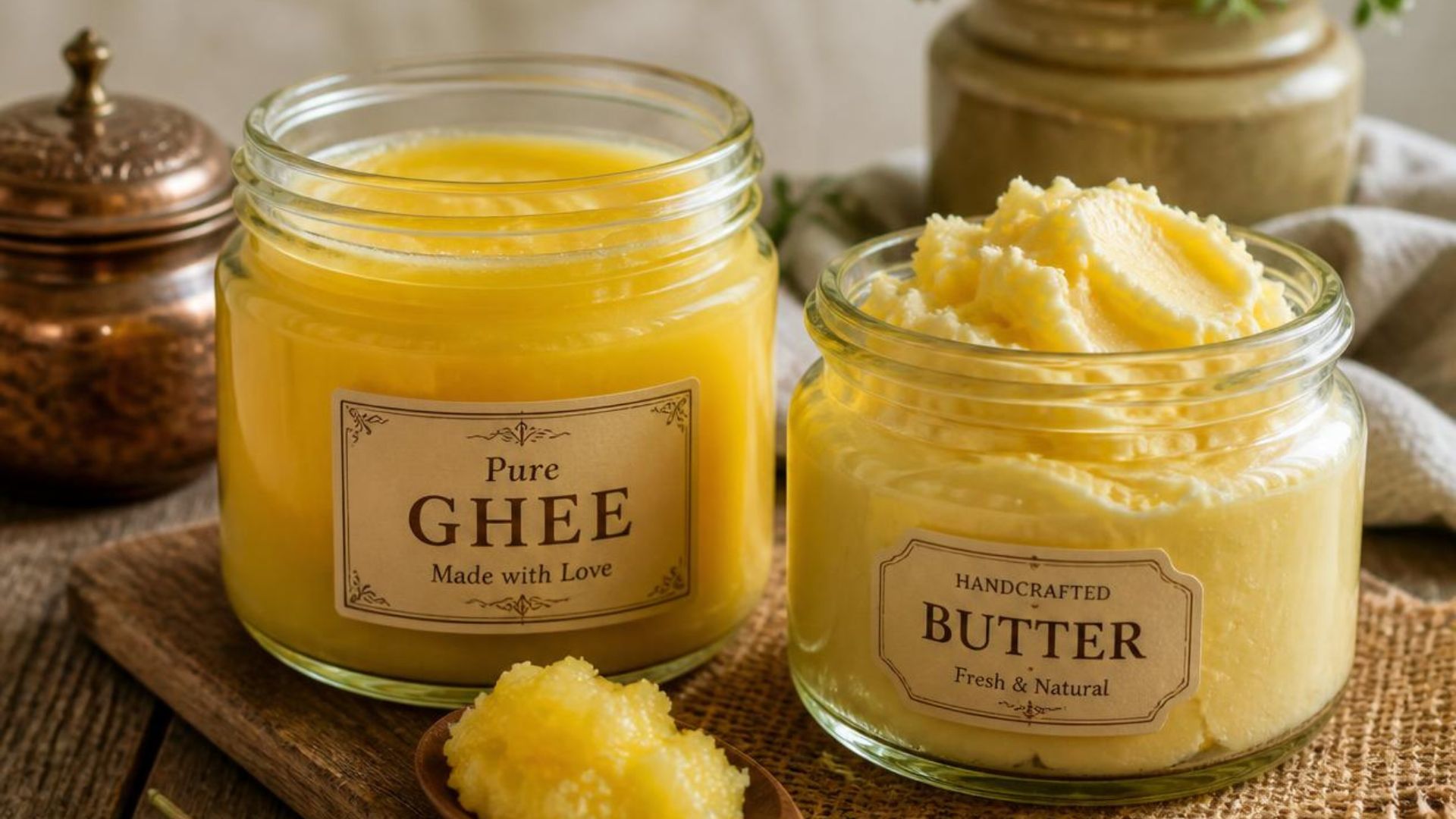

Is ghee healthier than butter? Ghee is generally the better choice for high-heat cooking and people with mild lactose sensitivity because most of its milk solids are removed during preparation. Butter, however, is better suited for baking and spreading due to its creamy texture and moisture content. Since both contain similar amounts of calories and saturated fat, neither is inherently healthier—the best choice depends on your cooking habits, dietary needs, and overall eating pattern.
Key Takeaways
- Choose ghee for frying, sautéing, and other high-heat cooking.
- Choose butter for baking, spreading, and recipes that benefit from its creamy texture.
- Both contain similar calories and saturated fat, so portion control is important.
- Ghee contains very little lactose and casein, making it suitable for many people with mild lactose intolerance.
- A balanced diet matters more than choosing one dairy fat over the other.
When it comes to healthy cooking fats, ghee and butter are two of the most popular choices. Both are made from milk and have been staples in kitchens for generations. However, they differ in their nutritional composition, cooking properties, and ideal uses.
Instead of asking whether one is completely healthier than the other, it’s more helpful to understand how each fits into your lifestyle and dietary needs. This guide compares ghee and butter to help you make an informed choice.
What Is Ghee?
Ghee is a type of clarified butter made by slowly heating butter until the water evaporates and the milk solids separate. The remaining golden liquid is pure milk fat with a rich, nutty aroma and a long shelf life.
Traditionally used in Indian cuisine, ghee is prized for its flavor, versatility, and stability during cooking.
Benefits of Ghee
- High smoke point (around 250°C), making it ideal for frying and sautéing
- Contains very little lactose and casein
- Rich in fat-soluble vitamins such as Vitamins A, E, and K
- Longer shelf life than butter when stored properly
- Adds a rich, nutty flavor to dishes
What Is Butter?
Butter is made by churning fresh cream until the fat separates from the buttermilk. Unlike ghee, it retains water and milk solids, giving it a soft texture and fresh, creamy taste.
Butter is commonly used for baking, spreading on bread, and cooking at low to medium temperatures.
Benefits of Butter
- Creamy texture and rich dairy flavor
- Excellent for baking cakes, cookies, and pastries
- Naturally contains Vitamins A and D
- Works well as a spread and finishing ingredient
Ghee vs. Butter: Nutritional Comparison
Both ghee and butter are calorie-dense dairy fats, but they differ in composition and cooking performance.
| Feature | Ghee | Butter |
|---|---|---|
| Calories | Similar | Similar |
| Fat Content | High | High |
| Saturated Fat | Slightly Higher | High |
| Lactose | Very Low | Present |
| Casein | Minimal | Present |
| Water Content | None | 15–20% |
| Smoke Point | Around 250°C | Around 175°C |
| Best For | High-heat cooking | Baking & spreading |
Ghee vs. Butter: Pros and Cons
| Ghee | Butter |
| Higher smoke point | Better for baking |
| Lower lactose content | Creamier texture |
| Longer shelf life | Fresh dairy flavor |
| Rich, nutty taste | Ideal as a spread |
| Great for frying and sautéing | Performs well in baked goods |
Is Ghee Healthier Than Butter?
For many people, ghee has a slight edge, particularly when it comes to cooking. However, this doesn’t mean butter is unhealthy.
The healthier option depends on how you use it and your individual dietary requirements.
Easier to Digest
Since most of the lactose and casein are removed during the clarification process, ghee may be easier to digest for people with mild lactose intolerance.
However, people with severe dairy allergies should seek medical advice before consuming either ghee or butter.
Better for High-Heat Cooking
One of ghee’s biggest advantages is its high smoke point.
Because it remains stable at higher temperatures, ghee is less likely to break down during frying, roasting, or sautéing, making it a preferred cooking fat for many households.
Rich in Fat-Soluble Vitamins
Ghee naturally contains:
- Vitamin A
- Vitamin E
- Vitamin K
These nutrients support vision, immune function, skin health, and bone health when consumed as part of a balanced diet.
Contains Beneficial Fatty Acids
Ghee contains small amounts of butyric acid, a short-chain fatty acid that supports gut health and contributes to maintaining a healthy digestive system.
When Butter May Be the Better Choice
Butter is still an excellent choice for many recipes.
Choose butter if you:
- Bake cakes, cookies, or pastries regularly
- Prefer a creamy spread for bread or toast
- Enjoy its fresh dairy flavor
- Usually cook at low or medium heat
Its moisture content also helps create the soft texture that many baked goods require.
Who Should Choose Ghee?
Ghee may be the better option if you:
- Frequently cook Indian dishes
- Fry or sauté foods regularly
- Have mild lactose sensitivity
- Prefer a rich, aromatic flavor
- Want a cooking fat with a higher smoke point
Who Should Choose Butter?
Butter may be the better choice if you:
- Bake frequently
- Enjoy creamy spreads
- Prefer its fresh dairy taste
- Rarely cook at very high temperatures
Common Myths About Ghee and Butter
Myth: Ghee contains fewer calories than butter.
Fact: Ghee and butter provide nearly the same amount of calories. Portion size matters far more than choosing one over the other.
Myth: Butter is unhealthy.
Fact: Butter can be included in a healthy diet when consumed in moderation as part of an overall balanced eating pattern.
Myth: Ghee is a superfood.
Fact: While ghee offers advantages like a higher smoke point and lower lactose content, it is still high in saturated fat and should be consumed in appropriate amounts.
What About Heart Health?
Both ghee and butter contain saturated fat. Current dietary guidance recommends limiting saturated fat intake and focusing on an overall balanced eating pattern rather than labeling individual foods as “good” or “bad.”
If you have high cholesterol, heart disease, or other medical conditions, consult your healthcare provider or a registered dietitian before making significant dietary changes.
Read More: https://adyadairy.com/ghee-and-weight-loss-debunking-myths-and-unveiling-facts/
Final Verdict: Ghee vs. Butter
There isn’t a single winner when it comes to ghee vs. butter. If you frequently cook at high temperatures or have mild lactose sensitivity, ghee has a slight advantage because of its higher smoke point and minimal lactose content. If you mainly bake or enjoy a creamy spread on bread, butter remains an excellent choice.
Ultimately, both can be part of a healthy diet when consumed in moderation. Rather than asking which is healthier, the better question is which one suits your cooking style, nutritional needs, and lifestyle. Choosing high-quality dairy products and maintaining an overall balanced diet will have a greater impact on your health than choosing one over the other.
Choose Quality for Better Nutrition
Whether you prefer ghee or butter, choosing high-quality dairy products ensures better taste and nutrition for your family. If you’re looking for the best ghee brand, explore Adya Dairy. Made from high-quality milk using traditional methods, our premium ghee delivers authentic taste, purity, and wholesome nutrition, making it the perfect choice for everyday cooking.