


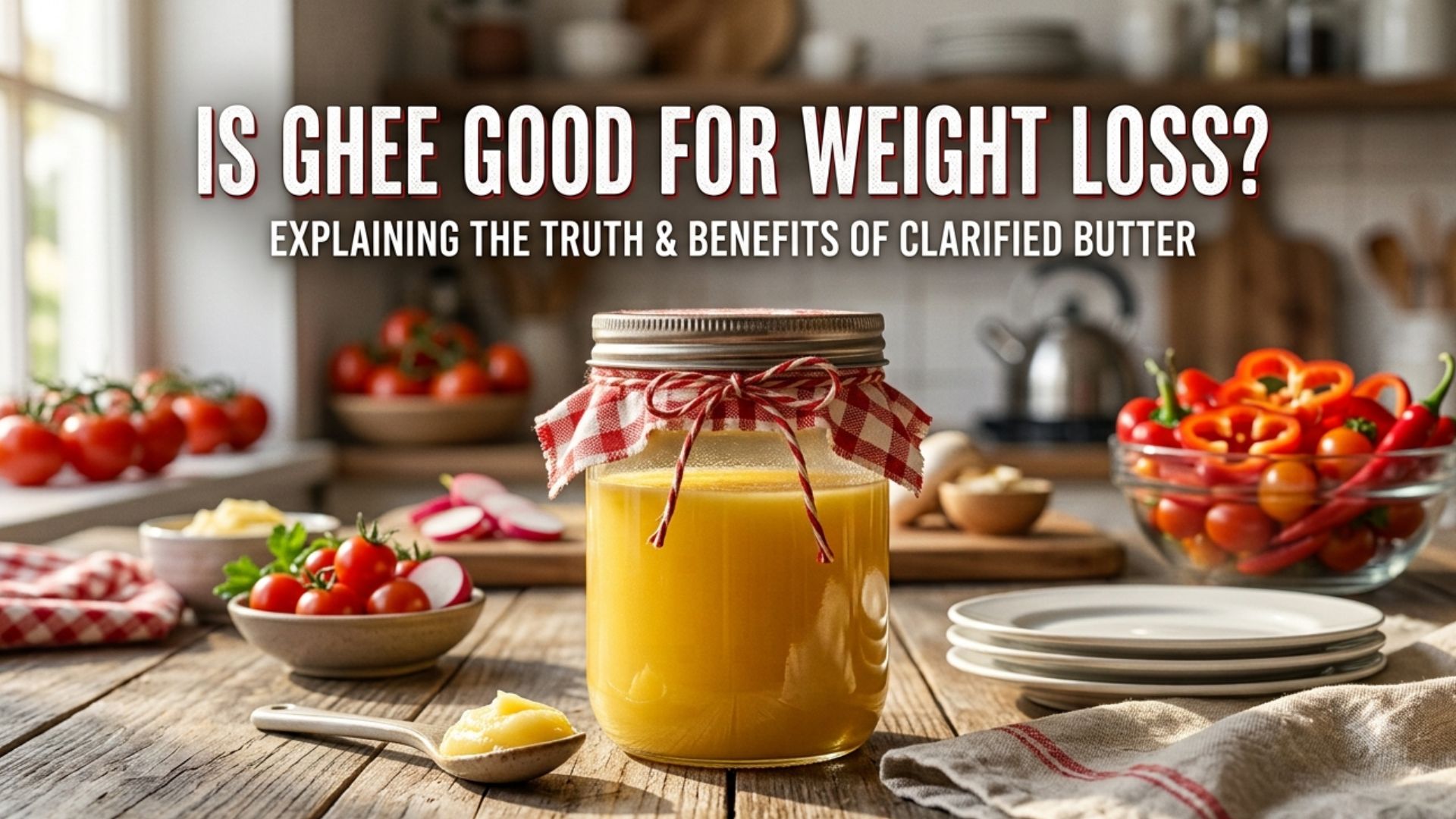

Yes, ghee can fit into a weight-loss diet when consumed in moderation, but it is not a fat-burning food. Ghee is calorie-dense and provides dietary fat, which can make meals more satisfying. However, weight loss still depends primarily on maintaining an appropriate calorie deficit. Using a small amount in place of another cooking fat is generally more sensible than simply adding extra ghee to your meals.
Can Ghee Help With Weight Loss?
Ghee can be part of a weight-loss diet, but it should not be considered a weight-loss food on its own.
The main factor behind weight loss is maintaining a calorie deficit, where you consume fewer calories than your body uses over time. Since fat provides 9 calories per gram, ghee is relatively energy-dense.
A tablespoon of ghee contains roughly 120 calories, while a teaspoon provides approximately 40 calories. The exact amount can vary depending on the serving size.
This is why the way you use ghee matters. Adding several tablespoons of ghee to meals can substantially increase your calorie intake. Using a small, measured amount instead of another source of added fat is a different situation.
The ICMR-National Institute of Nutrition (NIN) Dietary Guidelines for Indians recommend limiting ghee or butter to around 1–2 teaspoons per day, or avoiding them where possible.
So, if you enjoy ghee while trying to lose weight, the practical approach is to control the portion and include it within your overall daily fat and calorie intake.
Why Does Ghee Make Meals More Satisfying?
One reason people enjoy ghee in a weight-loss diet is that dietary fat can contribute to satiety, or the feeling of fullness after eating.
Ghee also adds flavour and richness to foods such as dal, roti, vegetables and khichdi. A small quantity may therefore make a meal more enjoyable and satisfying.
However, feeling fuller does not mean that ghee itself causes your body to burn more fat. Its calories still count towards your daily intake.
Does Ghee Support Digestion?
Ghee contains small amounts of butyrate and other short-chain fatty acids, which are also produced by the fermentation of dietary fibre by gut bacteria. Butyrate has been studied for its role in maintaining intestinal health.
However, it would be misleading to use this as a reason to claim that eating ghee directly causes weight loss.
If you are eating ghee for its flavour or as part of your traditional diet, its potential nutritional properties can be considered alongside the bigger picture: how much you eat and what your overall diet looks like.
Is Ghee Better Than Oil for Weight Loss?
Ghee is not automatically better than oil for weight loss.
Both ghee and cooking oils contribute calories, so replacing one with the other will not necessarily lead to weight loss if the quantity remains excessive.
A more useful approach is to replace rather than add.
For example, if you normally use another cooking fat in a recipe, using a measured amount of ghee instead may allow you to enjoy its flavour without adding another significant source of calories.
However, the type of fat also matters. Ghee contains a relatively high proportion of saturated fat. The World Health Organization recommends keeping saturated fat below 10% of total daily energy intake and favouring unsaturated fats where possible.
Therefore, ghee can be one part of your overall fat intake, but it does not need to replace every other cooking oil or become your primary source of dietary fat.
How Much Ghee Can You Eat During Weight Loss?
There is no single amount that is appropriate for everyone because dietary requirements vary according to factors such as age, body size, activity level and overall calorie intake.
However, the ICMR-NIN Dietary Guidelines for Indians suggest limiting ghee or butter to around 1–2 teaspoons per day.
For someone trying to manage their weight, this provides a useful practical reference.
You can use a small quantity:
- With roti instead of spreading it generously
- In dal or khichdi
- For tempering vegetables
- With rice
- In selected home-cooked preparations
The key is to measure the amount rather than pour ghee directly from the container.
It is also worth remembering that your daily fat intake comes from more than just ghee. Cooking oils, nuts, seeds, dairy products, fried foods and other ingredients all contribute calories and fat.
Does Ghee Burn Belly Fat?
No. Ghee does not specifically burn belly fat.
There is no particular food that can selectively remove fat from your stomach. Losing body fat requires sustained energy balance over time, generally supported by an appropriate diet and physical activity.
Claims that ghee can “melt belly fat” or dramatically accelerate fat burning should therefore be treated cautiously.
Ghee can be included in a balanced diet, but it should not be treated as a fat-burning supplement or shortcut to weight loss.
Read More: https://adyadairy.com/ghee-benefits-for-female-health/
What Is the Best Way to Eat Ghee for Weight Loss?
The best approach is to use a small, measured quantity as part of a balanced meal rather than adding it on top of your usual diet.
For example:
Dal + vegetables + roti + 1 teaspoon of ghee
can be a more practical approach than eating the same meal and then adding several teaspoons of ghee separately.
You can also think about what ghee is replacing. If it replaces another added fat in your cooking, you are not necessarily increasing the total amount of dietary fat. If you add it to food that already contains plenty of oil, butter or other calorie-dense ingredients, the additional calories can make weight management harder.
This distinction—replace rather than simply add—is one of the most useful ways to include ghee while controlling calories.
What Should You Look for When Buying Ghee?
If ghee is part of your regular diet, look for a product with clear ingredient information, appropriate food-safety standards and transparent labelling.
Quality considerations such as sourcing, processing, packaging and storage can help you make a more informed choice.
However, good-quality ghee is still calorie-dense and contains saturated fat. A premium or traditionally prepared product does not mean you should consume unlimited quantities.
For consumers in West Bengal, choosing a trusted dairy producer can also provide greater confidence when selecting ghee for regular household use.
Should You Stop Eating Ghee Completely to Lose Weight?
No, not necessarily.
You do not automatically need to eliminate ghee simply because you want to lose weight. What matters is your overall eating pattern and whether your calorie intake supports your goals.
If you enjoy ghee, a small measured quantity can fit into a balanced diet. If you regularly consume large amounts or find portion control difficult, reducing your intake may make calorie management easier.
The broader principle is simple: one food does not determine whether you gain or lose weight. Your overall dietary pattern, calorie intake and activity level matter far more.
So, Is Ghee Good for Weight Loss?
Ghee can fit into a weight-loss diet, but it does not cause weight loss by itself. It can make meals more satisfying and provides flavour, but it is also calorie-dense and relatively high in saturated fat. Keeping portions small and using ghee in place of another added fat is a more practical approach than adding it to an already calorie-dense meal.
For most people, the focus should be on maintaining an appropriate calorie deficit, eating a balanced diet and staying physically active—not on finding a single food that burns fat.
If you’re looking to include ghee in your everyday diet, choose a quality product and use it in moderation. Explore Adya Dairy’s range of ghee, made for everyday Indian cooking, and find an option that suits your preferences. Discover why Adya Dairy is considered the best ghee brand in West Bengal.