


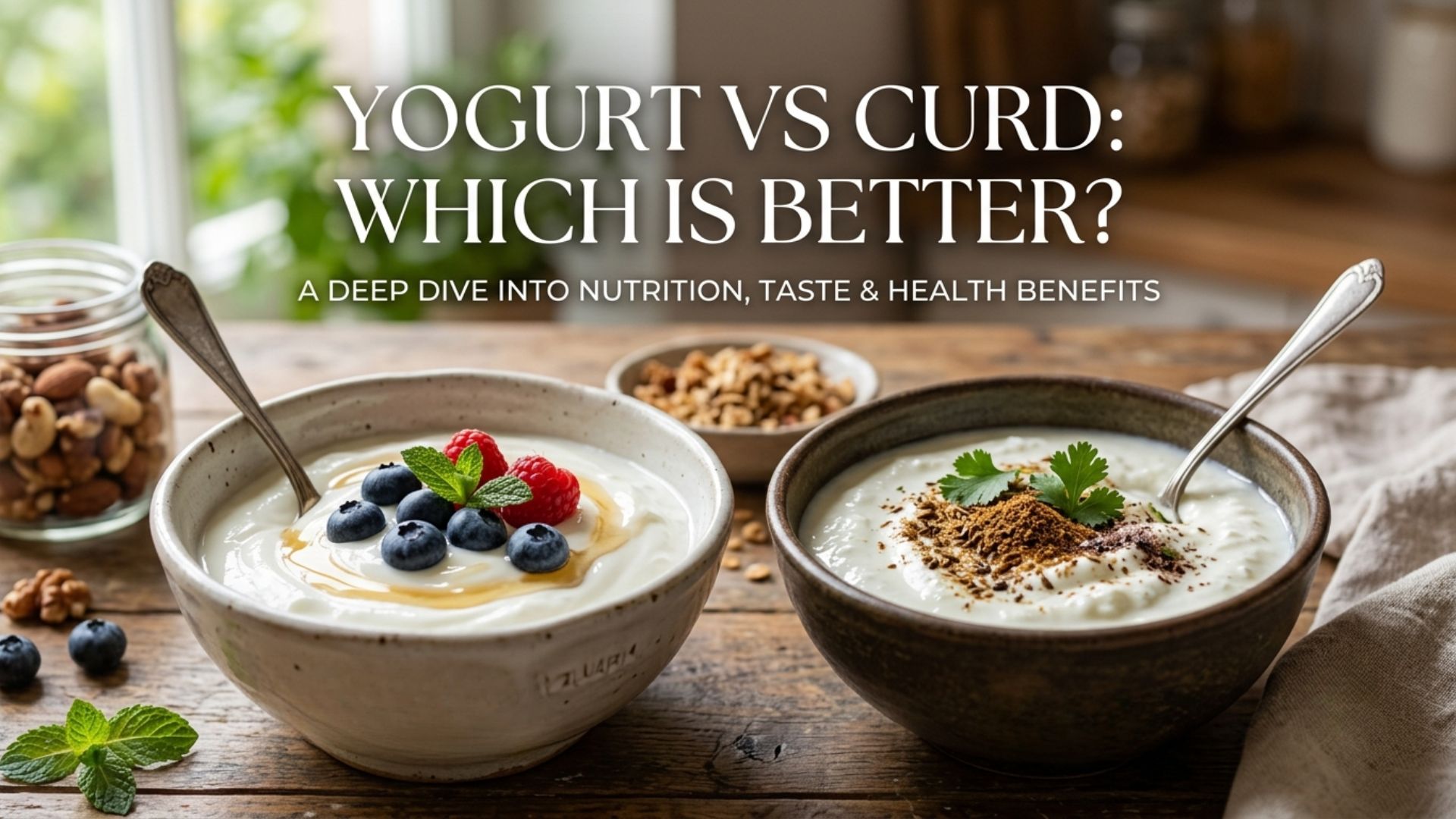

Yogurt and curd can both be healthy choices, and neither is universally better. Yogurt is generally made using specific starter cultures under controlled fermentation, while curd is traditionally prepared by fermenting milk with a previous batch of curd. Both can provide protein, calcium and other nutrients. The better choice depends on factors such as live cultures, added sugar, nutrition, freshness and personal preference.
What Is the Difference Between Yogurt and Curd?
Although yogurt and curd look and taste similar, their preparation methods are different.
Curd (dahi) is traditionally made by adding a small amount of existing curd to warm milk. Naturally occurring lactic acid bacteria ferment the milk, causing it to thicken and develop a mildly sour taste. The exact bacterial composition can vary depending on the starter, milk, temperature and fermentation conditions.
Yogurt is generally produced using selected bacterial starter cultures, commonly Lactobacillus bulgaricus and Streptococcus thermophilus. Commercial production allows manufacturers to control fermentation more consistently, resulting in a predictable taste, texture and acidity.
Yogurt vs Curd: At a Glance
| Factor | Curd | Yogurt |
|---|---|---|
| Fermentation | Traditionally uses a curd starter | Uses selected starter cultures |
| Texture | Can vary depending on preparation | Usually more consistent |
| Taste | Usually mildly to distinctly sour | Generally creamy and tangy |
| Bacterial cultures | Can vary | Depends on the cultures used |
| Protein | Provides protein | Provides protein |
| Calcium | Provides calcium | Provides calcium |
| Added sugar | Usually absent in plain curd | May be present in flavoured varieties |
| Everyday use | Common in Indian meals | Popular for breakfast, snacks and desserts |
The important takeaway is that the name alone does not determine which product is healthier. The ingredients, nutritional profile, cultures, processing method and added sugar are more useful factors to consider.
Is Curd Healthier Than Yogurt?
Curd can be a nutritious part of a balanced diet. It provides protein, calcium and other nutrients naturally present in milk, while fermentation produces live microorganisms.
However, the nutritional and bacterial profile of curd can vary depending on how it is prepared. Homemade curd and commercially manufactured curd may therefore have different characteristics.
Plain, unsweetened curd is particularly useful as an everyday food because it does not contain the added sugars that may be present in some flavoured dairy products.
So, curd is not automatically healthier than yogurt, but plain curd can be an excellent choice when it fits your dietary needs.
Read More: https://adyadairy.com/curd-benefits-for-skin-natural-glow-hydration/
Is Yogurt Better Than Curd?
Yogurt can also be a highly nutritious choice. One of its advantages is the controlled use of specific starter cultures during manufacturing.
Some yogurt products are made with live cultures, and the packaging may identify the cultures used. This can be useful for consumers who specifically want fermented dairy containing live microorganisms.
However, not all yogurt products are nutritionally identical. Flavoured yogurts may contain added sugar, while strained or Greek-style yogurts can have a higher protein content than conventional varieties.
Therefore, when choosing yogurt, check the ingredients and nutrition information instead of assuming every yogurt provides the same benefits.
Yogurt vs Curd: Which Is Better for Digestion?
Both curd and yogurt are fermented dairy foods and may be easier for some people to digest than milk.
During fermentation, bacteria use some of the lactose present in milk. This means fermented dairy products may be better tolerated by some people who have difficulty digesting lactose.
However, tolerance varies from person to person. Curd and yogurt still contain some lactose, so people with lactose intolerance may experience symptoms depending on the amount consumed and their individual tolerance.
It is also important to remember that lactose intolerance and milk allergy are different conditions. People with a milk allergy should follow appropriate medical and dietary guidance rather than simply switching between curd and yogurt.
Which Has More Probiotics: Curd or Yogurt?
There is no universal answer to whether curd or yogurt contains more probiotics.
The number and type of beneficial microorganisms depend on the cultures used, fermentation conditions, processing and storage. The word “curd” does not guarantee a particular probiotic strain or quantity. Similarly, not every yogurt product contains the same live cultures.
If live cultures are important to you, check the product label for information about live or active cultures and follow the recommended storage instructions.
This is a better approach than choosing a product solely because it is labelled “curd” or “yogurt.”
Yogurt vs Curd: Nutritional Comparison
Both foods can contribute important nutrients to your daily diet.
Protein
Curd and yogurt provide protein, which contributes to the maintenance of normal muscles and supports several functions in the body.
The exact amount varies depending on the milk used and how the product is processed. Strained yogurt, for example, can have a different protein concentration from regular yogurt.
Calcium
Both curd and yogurt can be useful sources of calcium. Calcium contributes to the maintenance of normal bones and teeth and supports normal muscle and nerve function.
The amount varies between products, so checking the nutrition label is the best way to compare specific options.
Fat
The fat content depends on the type of milk and formulation. Full-fat, low-fat and reduced-fat versions can therefore have different nutritional profiles.
Your choice can depend on your overall dietary requirements and preferences.
Sugar
Plain curd and plain yogurt contain naturally occurring lactose from milk. However, flavoured or sweetened dairy products may contain additional added sugar.
If you are trying to reduce added sugar, compare labels and choose plain, unsweetened varieties where appropriate.
Read more: https://adyadairy.com/is-curd-a-good-source-of-protein/
Which Is Better for Weight Management: Yogurt or Curd?
Neither curd nor yogurt should be considered a magic weight-loss food.
Weight management depends on your overall diet, portion sizes, physical activity and energy intake. However, plain curd or yogurt can be included in a balanced eating pattern because they provide protein and can be satisfying.
When comparing products, consider:
- Calories per serving
- Protein content
- Added sugar
- Fat content
- Serving size
- Ingredients
A plain, unsweetened product can often be a practical everyday option, particularly when compared with heavily sweetened dairy snacks.
Can You Eat Curd and Yogurt Every Day?
For most people who tolerate dairy products, curd or yogurt can be included regularly as part of a balanced diet.
Curd can be paired with rice, vegetables and traditional Indian meals, while yogurt can be enjoyed with fruit, cereals or as part of breakfast and snacks.
The key is to maintain variety. While fermented dairy can provide useful nutrients, it should complement rather than replace other nutritious foods in your diet.
People with milk allergies, significant lactose intolerance or specific dietary restrictions should choose dairy products according to their individual needs.
Which Is Better: Yogurt or Curd?
For most people, plain unsweetened curd and yogurt are both nutritious choices, so there is no universal winner.
Choose curd if you prefer traditionally fermented dairy, a familiar sour taste and a product that naturally complements Indian meals.
Choose yogurt if you prefer a more consistent texture, specific starter cultures or a wider variety of formulations.
If your priority is live cultures, check the product label rather than assuming that all curd or yogurt contains the same microorganisms. If your priority is reducing added sugar, plain and unsweetened varieties are generally a better choice than sweetened alternatives.
Ultimately, the better option is the one that provides the nutrition you need, suits your taste and fits comfortably into your overall diet.
Choose Quality Dairy for Everyday Consumption
Whether you prefer curd or yogurt, product quality matters. Fresh ingredients, hygienic manufacturing, appropriate fermentation, proper packaging and correct storage all contribute to a better dairy product.
Adya Dairy focuses on providing quality dairy products for everyday consumption. If you are looking for the best curd brand, explore Adya Dairy and choose a product that combines quality, freshness and great taste for your family’s everyday meals.