


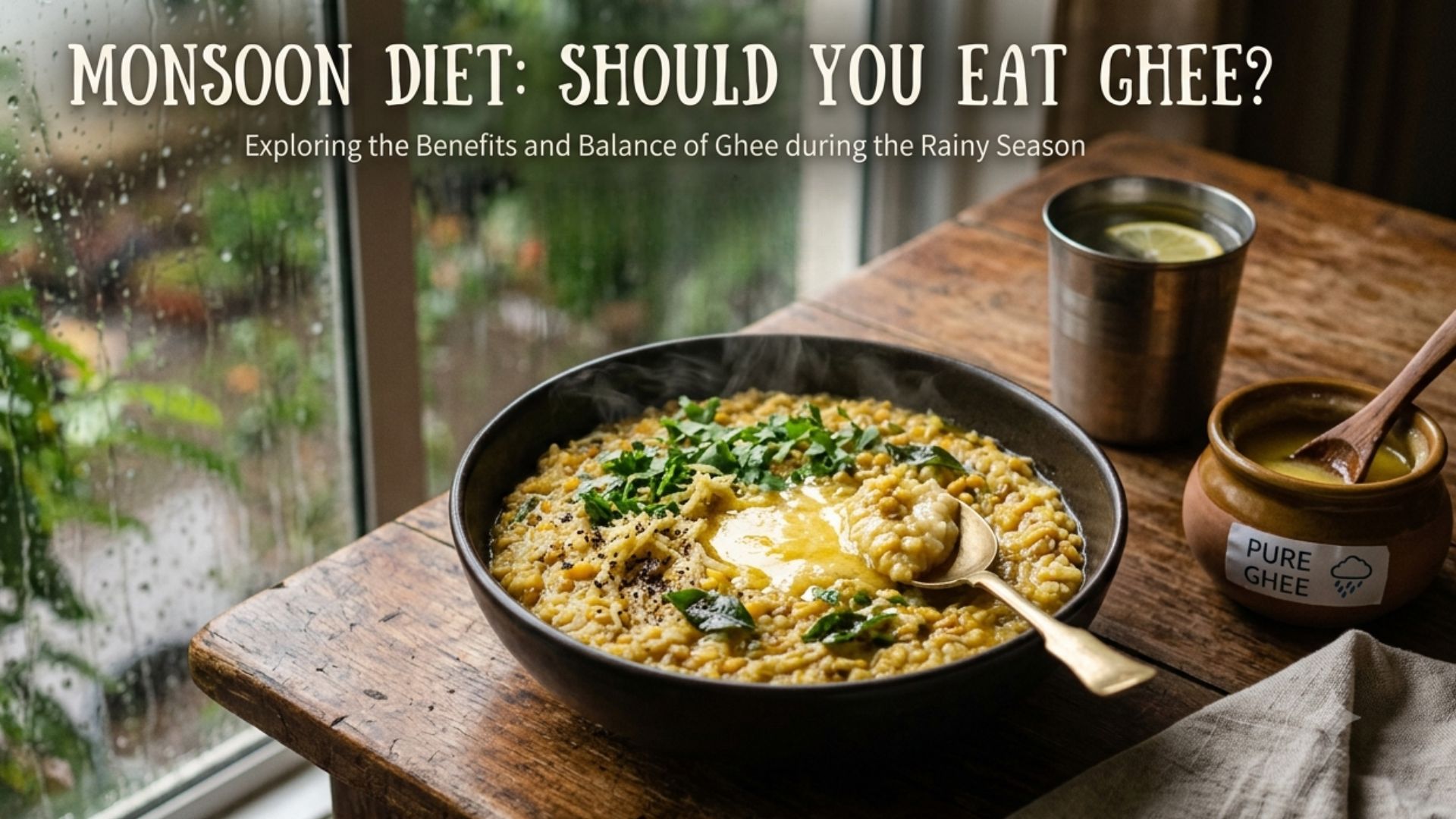

Yes, ghee can be a healthy addition to your monsoon diet when consumed in moderation. Rich in healthy fats, butyric acid, and fat-soluble vitamins, pure ghee supports digestion, nutrient absorption, and overall wellness during the rainy season. The key is to choose high-quality, pure ghee and enjoy it as part of a balanced diet.
The monsoon season brings much-needed relief from the summer heat, but it also increases the risk of digestive issues, seasonal infections, and sluggish metabolism. Changes in humidity and temperature can affect your body’s ability to digest food efficiently, making it essential to choose nourishing, easy-to-digest meals.
One food that often sparks debate during the rainy season is ghee. While some people believe it should be avoided because it’s rich in fat, others consider it a staple for maintaining health. So, should you eat ghee during the monsoon? Let’s explore what nutrition and traditional wisdom suggest.
Is Ghee Good to Eat During the Monsoon?
Yes. For most healthy individuals, pure ghee is safe and beneficial during the monsoon when consumed in moderation.
According to Ayurveda, digestion tends to weaken during the rainy season due to increased humidity. Ghee is traditionally valued for supporting digestive health and nourishing the body. From a nutritional perspective, it provides healthy fats that help the body absorb essential vitamins while adding richness to wholesome meals.
Rather than avoiding ghee completely, focus on eating the right quantity alongside a balanced diet.
Benefits of Eating Ghee During the Rainy Season
Including a small amount of ghee in your daily meals offers several health benefits during the monsoon.
Supports Better Digestion
Humidity and seasonal changes can slow digestion, making heavy meals feel uncomfortable. Ghee contains butyric acid, a short-chain fatty acid that supports gut health and helps maintain a healthy digestive system.
Adding a teaspoon of ghee to dal, rice, or khichdi can make meals more satisfying while supporting better digestion.
Helps the Body Absorb Essential Nutrients
Many important nutrients require healthy fats for proper absorption. Vitamins A, D, E, and K are fat-soluble, meaning your body absorbs them more effectively when healthy fats like ghee are included in your meals.
A small amount of ghee with vegetables, lentils, or whole grains can improve the nutritional value of your diet.
Supports Overall Immunity
Monsoon often brings seasonal illnesses. While ghee is not a medicine or a cure, it contains vitamins that contribute to normal immune function as part of a balanced and nutritious diet.
Combined with adequate sleep, hydration, and healthy eating, ghee can be one component of an overall wellness-focused lifestyle.
Provides Long-Lasting Energy
Healthy fats digest more slowly than refined carbohydrates, helping provide steady energy throughout the day. This can be especially helpful during the rainy season when many people experience fatigue or reduced activity levels.
Enhances the Taste of Healthy Meals
One of the simplest reasons people enjoy ghee is its rich flavour. A spoonful of pure ghee can transform simple home-cooked meals into comforting, satisfying dishes without relying on processed ingredients.
Read More: https://adyadairy.com/ghee-vs-butter-which-is-healthier/
Myth vs. Fact: Should You Avoid Ghee During the Monsoon?
Many misconceptions surround ghee during the rainy season. Here’s what you should know.
| Myth | Fact |
|---|---|
| Ghee should be completely avoided during monsoon. | Moderate amounts of pure ghee can be part of a healthy rainy season diet. |
| Eating ghee causes coughs and colds. | There is no scientific evidence that moderate consumption of pure ghee directly causes seasonal illnesses in healthy individuals. |
| All fats are unhealthy during the rainy season. | Healthy fats are essential for nutrient absorption and overall health. |
| Ghee always leads to weight gain. | Weight management depends on your total calorie intake, activity level, and overall eating habits. |
Best Foods to Eat with Ghee During the Monsoon
Pairing ghee with freshly prepared meals makes it easier to enjoy its nutritional benefits.
Some healthy options include:
- Warm khichdi topped with a teaspoon of ghee.
- Dal and steamed rice.
- Whole wheat rotis with a light spread of ghee.
- Millet-based dishes.
- Moong dal soup.
- Vegetable pulao.
- Steamed vegetables.
- Homemade porridges.
These meals are generally lighter, comforting, and suitable for the rainy season.
Can Eating Ghee During Monsoon Be Harmful?
Ghee itself is not harmful for most people. However, consuming excessive amounts may increase your overall calorie intake.
It’s best to avoid:
- Overeating ghee.
- Combining ghee with deep-fried or highly processed foods.
- Consuming adulterated or poor-quality ghee.
- Ignoring portion control.
Individuals with specific medical conditions, such as high cholesterol or heart disease, should consult a healthcare professional before making significant dietary changes.
How Much Ghee Should You Eat?
For most healthy adults, one to two teaspoons of ghee per day is generally considered a reasonable amount as part of a balanced diet.
The ideal quantity depends on factors such as:
- Age
- Activity level
- Overall calorie intake
- Existing medical conditions
- Personal health goals
Instead of eating ghee separately, include it naturally in your regular meals.
How to Choose Pure Ghee
Not all ghee offers the same nutritional quality. Choosing authentic, high-quality ghee ensures you receive its natural goodness.
Look for ghee that is:
- Made from pure milk or cultured butter.
- Free from artificial colours and preservatives.
- Produced under strict hygiene standards.
- Rich in its natural aroma and golden colour.
- Clearly labelled with simple ingredients.
Good-quality ghee not only tastes better but also provides greater confidence in its purity.
Final Thoughts
So, should you eat ghee during the monsoon? Yes. When enjoyed in moderation, pure ghee can be a valuable part of a healthy monsoon diet. It supports digestion, helps the body absorb essential nutrients, provides sustained energy, and enhances the taste of wholesome home-cooked meals.
The key is to choose pure, high-quality ghee, maintain portion control, and pair it with a balanced diet rich in fruits, vegetables, whole grains, and adequate hydration.
If you’re looking for the best ghee brand, Adya Dairy offers pure, premium-quality ghee crafted with trusted dairy expertise and stringent quality standards. Bring the authentic taste and nourishment of pure ghee to your monsoon meals with Adya Dairy and enjoy wholesome nutrition every day.