


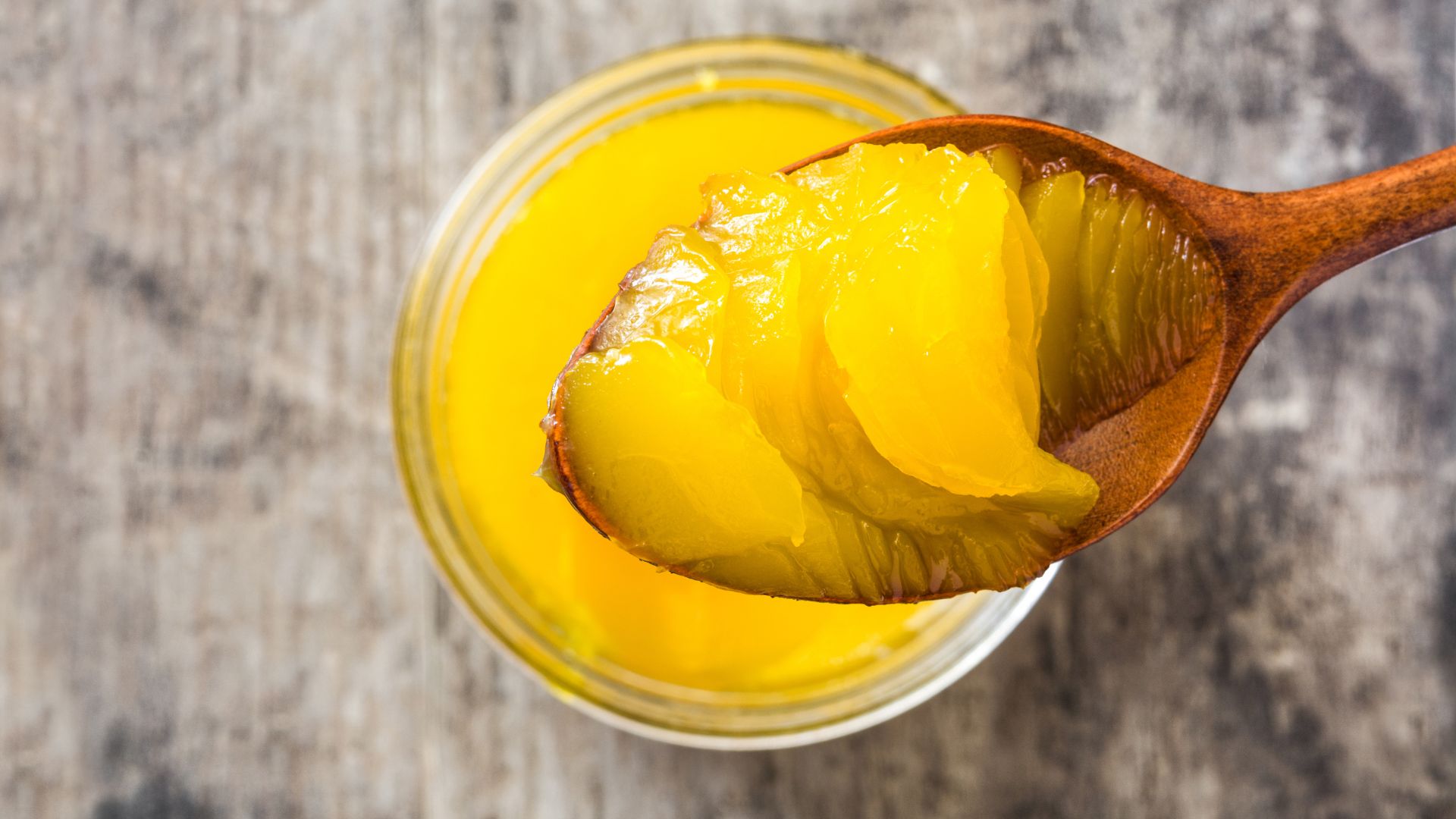

Ghee is a clarified butter known for its rich flavour, aroma and versatility in Indian cooking. It provides dietary fat, energy and small amounts of fat-soluble vitamins while containing very little water and milk solids. When consumed in moderation, ghee can be included as part of a balanced, varied diet.
What Is Ghee?
Ghee is a form of clarified butter made by gently heating butter until its water evaporates and the milk solids separate from the fat. The remaining golden fat is filtered to create ghee, which has a distinctive buttery and nutty aroma.
Ghee has been used in Indian cuisine for centuries and remains popular for cooking, tempering spices, preparing sweets and adding richness to everyday meals. Its high smoke point also makes it suitable for several cooking methods.
What Is the Nutritional Value of Ghee?
Ghee is primarily a source of dietary fat and is therefore calorie-dense. Its exact nutritional composition can vary depending on the milk source and production process.
Approximate Nutritional Value of Ghee per 100g
| Nutrient | Approximate amount |
|---|---|
| Energy | ~900 kcal |
| Total fat | ~100g |
| Saturated fat | ~60–65g |
| Protein | ~0g |
| Carbohydrates | ~0g |
Ghee can also contain fat-soluble vitamins such as vitamins A, E and K, although the amounts vary between products. Because ghee is concentrated fat, portion size is important when including it in your daily diet.
What Are the Benefits of Ghee?
Ghee can offer nutritional and culinary benefits when consumed as part of an overall balanced diet.
1. Provides a Concentrated Source of Energy
Fat provides more calories per gram than carbohydrates or protein. Ghee can therefore add energy to meals in a relatively small serving, which can be useful for people who need energy-dense foods.
2. Contains Fat-Soluble Vitamins
Ghee may contain fat-soluble vitamins, including vitamins A, E and K. These nutrients have different roles in normal bodily functions. The actual vitamin content can vary depending on factors such as the milk source and processing method.
3. Contains Different Types of Fatty Acids
Ghee contains a combination of saturated and monounsaturated fatty acids, along with smaller amounts of other fatty acids. Its nutritional profile makes portion control important, particularly because saturated fat should be consumed within recommended dietary limits.
4. Adds Flavour to Food
One of ghee’s practical advantages is its distinctive flavour and aroma. A small amount can add richness to dals, vegetables, rice, rotis and traditional Indian dishes without requiring large quantities.
5. Works Well for Cooking
Ghee is commonly used for sautéing, frying, roasting and tempering spices. Its high smoke point makes it a versatile cooking fat for many everyday recipes.
Read More: https://adyadairy.com/ghee-vs-butter-which-is-healthier/
Is Ghee Good for Everyday Cooking?
Yes, ghee can be used for everyday cooking when consumed in appropriate amounts. It works particularly well for Indian dishes where its rich flavour complements spices, grains, vegetables and lentils.
However, ghee is still a calorie-dense fat and contains a high proportion of saturated fat. Using moderate portions and varying your dietary fat sources is a better approach than relying heavily on any single cooking fat.
Read More: https://adyadairy.com/ghee-and-weight-loss-debunking-myths-and-unveiling-facts/
How Much Ghee Should You Consume?
There is no universal amount of ghee that is suitable for everyone. The appropriate quantity depends on your overall diet, energy requirements, activity level and individual nutritional needs.
Because ghee is high in calories, even small portions can contribute significantly to total fat intake. A practical approach is to use enough to provide flavour and meet your dietary needs without allowing it to replace a wide variety of nutrient-rich foods.
How Do You Choose the Best Ghee?
The best ghee is not simply the one with the strongest aroma or deepest colour. Quality, freshness, ingredients, production standards and storage all matter when choosing a product.
Here are some factors to consider:
Check the Ingredients
Look for clear and straightforward ingredient information. A quality ghee product should have transparent labelling that allows you to understand what you are purchasing.
Look at the Colour and Consistency
Ghee can range from pale yellow to a deeper golden shade depending on factors such as the milk source and processing. Consistency can also vary with temperature. Colour alone should therefore not be treated as proof of quality.
Consider Aroma and Flavour
Good-quality ghee generally has a clean, characteristic buttery or nutty aroma. An unusual, rancid or unpleasant smell may indicate that the product is no longer at its best.
Check Freshness
Always check the manufacturing date and best-before date. Properly stored ghee should retain its characteristic aroma, flavour and appearance throughout its intended shelf life.
Look for Appropriate Quality Standards
Food-safety practices, hygienic manufacturing and appropriate quality controls are important when choosing packaged dairy products. Buyers should consider the manufacturer’s transparency and quality standards alongside the product itself.
Consider Packaging and Storage
Ghee should be packaged in a clean, properly sealed container that protects it from moisture and contamination. Packaging should also provide clear information about the product, manufacturer and storage requirements.
Is Ghee Naturally Free From Lactose?
Ghee contains very little lactose because most of the milk solids are separated during clarification. However, it should not automatically be considered suitable for people with a milk allergy, as trace amounts of milk components may remain.
Anyone with a diagnosed milk allergy or specific dietary restriction should check the product label and seek appropriate professional advice before consuming it.
How Should Ghee Be Stored?
Store ghee in a clean, dry and tightly sealed container, following the manufacturer’s storage instructions. Use a clean, dry spoon when handling it and avoid introducing water or food particles into the container.
Protecting ghee from moisture, heat and contamination helps preserve its flavour and quality. Always follow the storage guidance provided on the product packaging.
How Can You Include Ghee in Your Diet?
Ghee is versatile and can be incorporated into a variety of everyday meals. Common uses include:
- Tempering dal, vegetables and curries
- Cooking or roasting vegetables
- Preparing rice and pulao
- Spreading a small amount on rotis or other breads
- Adding richness to traditional Indian sweets
- Sautéing spices and other ingredients
The key is moderation. Ghee can complement a balanced diet, but it should be consumed alongside a variety of vegetables, fruits, whole grains, pulses, protein sources and other nutrient-rich foods.
Read More: https://adyadairy.com/monsoon-diet-should-you-eat-ghee/
Ghee: A Traditional Ingredient for Modern Kitchens
Ghee remains popular because it combines a distinctive flavour with versatility in cooking. It provides concentrated dietary fat and energy and can contain fat-soluble vitamins, while its clarified nature means it contains very little water and milk solids.
When selecting ghee, focus on transparent ingredients, freshness, quality standards, aroma, packaging and proper storage rather than relying on colour alone. Most importantly, use it in sensible portions as part of an overall balanced diet.
For quality dairy products made with care and suitable for everyday use, explore Adya Dairy. Choose the best ghee for your kitchen by considering product quality, freshness, transparent labelling and trusted manufacturing standards.